Overcoming Retirement Anxiety: Embrace Personal Growth
Retirement Anxiety, Thinking Styles, Personal Growth
When Retirement Brings Change Anxiety: Finding Your Own Way Forward
Retirement is often seen as a time of freedom and relaxation, but it can also bring anxiety, questions about identity, and uncertainty. At the same time, it offers a chance to reflect, grow, and shape a life that feels more like you.
Why Change Anxiety Shows Up Around Retirement
Any major change can stir anxiety, and retirement is one of the biggest. You may be stepping away from routines, roles, and structures that have shaped your identity for decades. Questions like “Who am I without my job?” or “What will my days look like?” are completely natural. This change anxiety is not a sign that something is wrong with you; it is your mind trying to protect you in the face of uncertainty.
Rather than fighting the anxiety, try getting curious about how you naturally approach change. Your Thinking Styles during this transition can help you find strategies that feel more supportive and less overwhelming.
Four Helpful Thinking Styles for Navigating Retirement
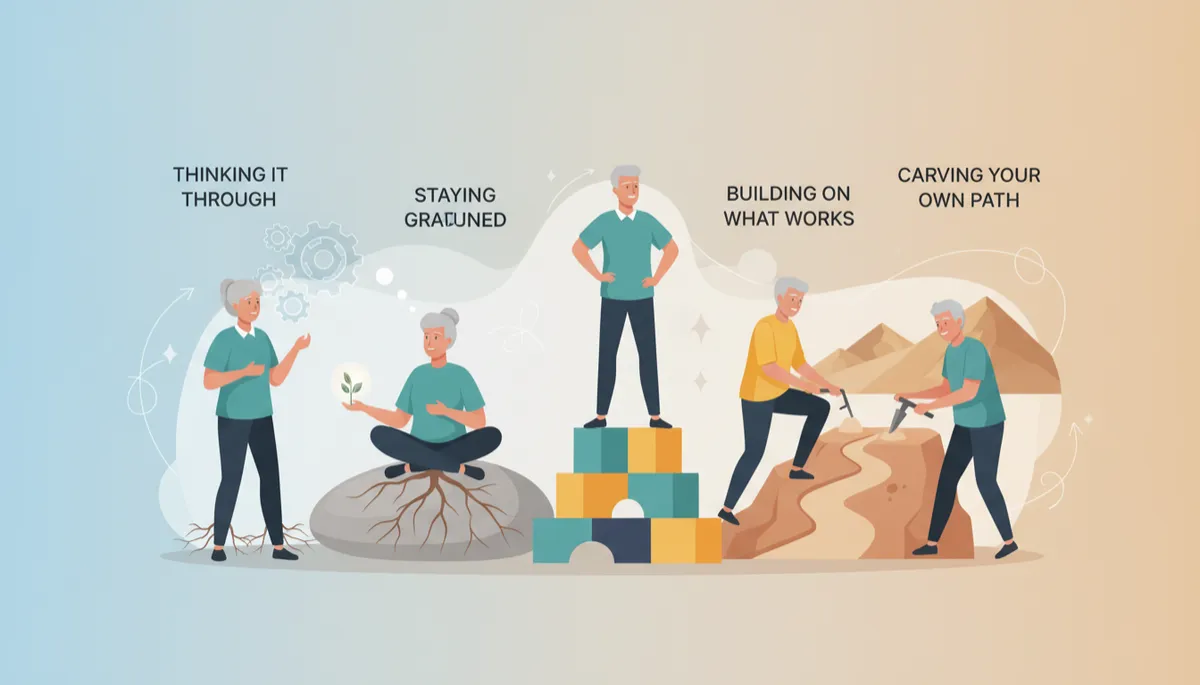
When considering retirement, you may lean toward Thinking it Through, Staying Grounded, Building on What Works, or Carving Your Own Path.
1. Thinking It Through: The Planner
If you instinctively research, list, and analyze, you may be a Thinking It Through type. Detailed spreadsheets, pension comparisons, and five-year plans can ease Retirement Anxiety by creating structure and predictability.
Make a gentle timeline for financial, lifestyle, and emotional planning
Schedule “check-in” points to adjust plans instead of expecting perfection from the start
2. Staying Grounded: The Steady Navigator
Staying Grounded means relying on routines, values, and simple practices to stay steady. If “what ifs” overwhelm you, grounding can calm your nervous system and support clearer choices.
It might look like a morning walk, a brief breathing exercise, or a weekly coffee with a trusted friend
Grounding techniques support mental well-being while you explore new possibilities for this chapter

Simple daily grounding rituals can soften retirement-related anxiety and clear your mind.
3. Building on What Works: The Strengths Builder
Build on what works by drawing on past strengths. Perhaps you adapt well to new roles or stay emotionally steady through social connections. Rather than start from scratch, ask: “What has helped me through other transitions, and how can I bring that forward now?”
Reflecting on past life changes, moves, career shifts, relationship changes, what did you do that helped?
Identify strengths, like curiosity, persistence, or humour, etc., and intentionally use them now
4. Carving Your Own Path: The Trailblazer
For some, carving your own path is retirement’s most energizing part. You may feel drawn to start a business, volunteer, pursue creative projects, or build an unconventional lifestyle. This approach honours your individuality and fosters personal growth.

Designing your own version of retirement can be a powerful act of self-definition.
Blending Styles: Your Personalized Transition Strategy
Most people combine these approaches. You might think things through with a financial planner, stay grounded in daily routines, build on what works by keeping some part-time work, and gradually explore your own path through new hobbies or roles.
📌 Key takeaway: There is no single “correct” way to do retirement. The best transition strategies are the ones that honour your values, your nervous system, and your lived experience.
Taking the Next Step Toward a Meaningful Retirement
Retirement is not just about stopping work; it is about reshaping your relationship with time, purpose, and self. Understanding whether you lean toward Thinking it Through, Staying Grounded, Building on What Works, or Carving Your Own Path can turn a vague sense of unease into a clearer, kinder plan for what comes next.


