Box Breathing and Body Scan Guide for Mindfulness
Wellness, Breathwork, Mindfulness
Box Breathing with a Body Scan: A Simple Step‑by‑Step Guide
Learn box breathing in three levels—easy, moderate, and advanced—and pair it with a gentle body scan, focusing each breath cycle on a different part of your body.
What Is Box Breathing?
Box breathing is a simple pattern: inhale, hold, exhale, then hold again for equal counts, like tracing the four sides of a square. It’s widely used to calm the nervous system, sharpen focus, and foster a steady, grounded sense of presence in both body and mind.
You can practice anywhere—at your desk, before bed, or whenever you feel stressed. Start with a count that feels comfortable, then gradually increase it as your lungs and nervous system adapt.
Three Levels of Box Breathing: Easy, Moderate, Advanced
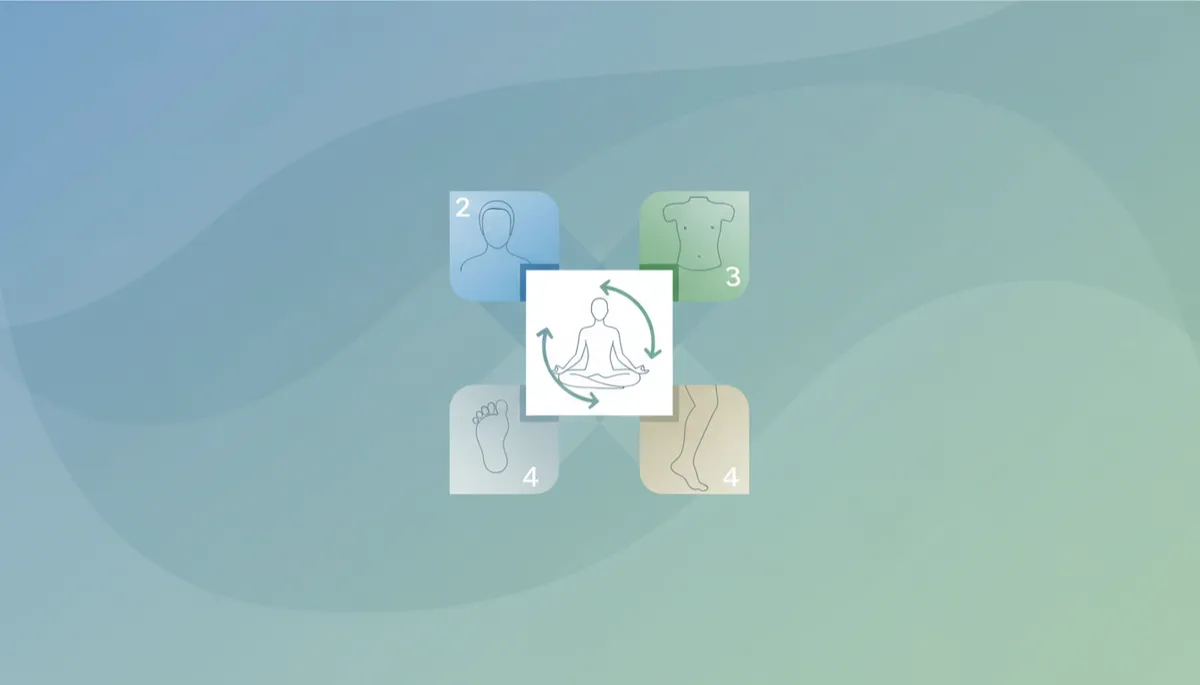
To make box breathing easier to approach, divide it into three levels of “holds.” Keep all four sides of the breath the same length at each level, and vary the number of counts you hold your breath. Move up a level only when the previous one feels smooth and relaxed.
Level 1: Easy – 2‑Count Holds (2–2–2–2)
Inhale gently through the nose for 2 counts.
Hold the breath in for 2 counts.
Exhale softly through the nose for 2 counts.
Hold the breath out for 2 counts.
This “easy” 2‑hold pattern is ideal if you are new to breathwork, feeling anxious, or simply want a gentle reset without strain.
Level 2: Moderate – 3‑Count Holds (3–3–3–3)
Inhale for 3 counts.
Hold for 3 counts.
Exhale for 3 counts.
Hold with lungs empty for 3 counts.
The moderate 3‑hold level adds a bit more depth and control, making it a good everyday practice once the 2‑count version feels easy and steady.
Level 3: Advanced – 4‑Count Holds (4–4–4–4)
Inhale for 4 counts.
Hold the breath for 4 counts.
Exhale for 4 counts.
Hold empty for 4 counts.
This advanced 4‑hold pattern creates a deeper, slower rhythm. Only use it if you feel no strain, no urge to gasp, and can stay relaxed in your face, neck, and shoulders throughout the cycle.
⚠️ Gentle Reminder: If at any time your breath feels tight, dizzy, or uncomfortable, simply drop back to a shorter count or return to natural breathing.
Blending Box Breathing with a Body Scan
A body scan is a mindfulness practice that guides your attention slowly through different parts of your body, noticing sensations without trying to change them. Pairing it with box breathing makes each breathing cycle an anchor for a specific body area, helping you feel grounded from head to toe.
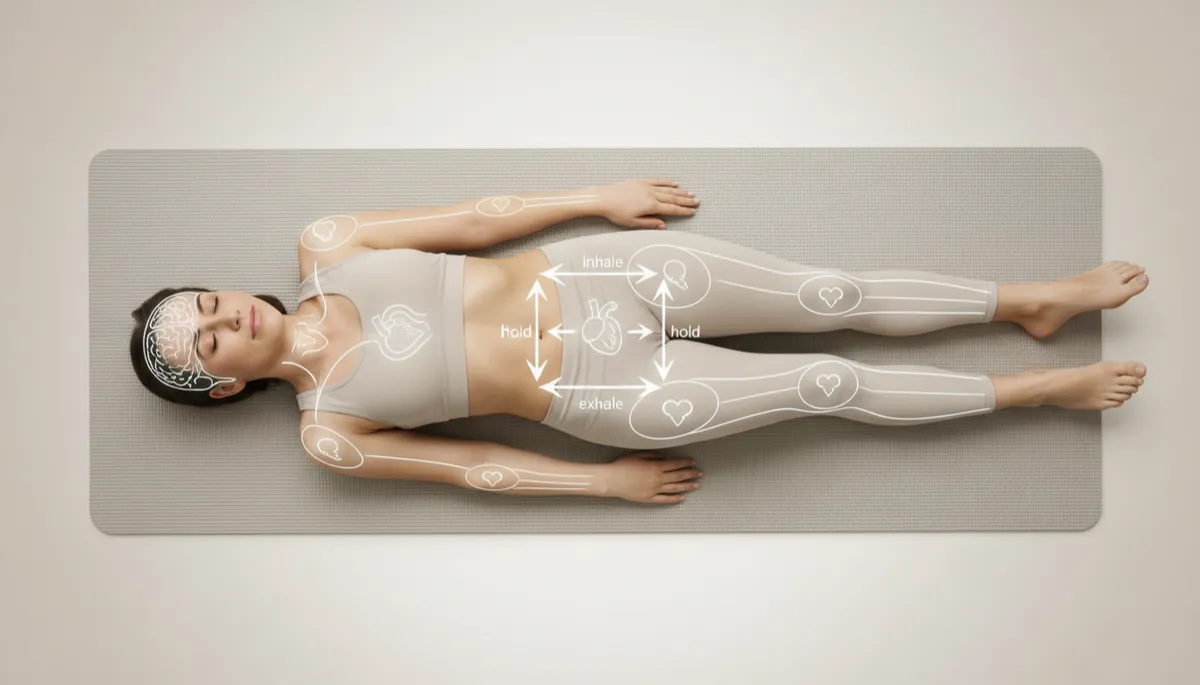
Pairing each breath cycle with a body area deepens relaxation and focus.
A Guided Practice: Shifting Focus with Each Box Cycle
Choose your level: easy (2-hold), moderate (3-hold), or advanced (4-hold). Then use each complete box cycle (inhale–hold–exhale–hold) to focus on a different part of your body.
Here’s a simple sequence to follow:
Crown of the head and face: Notice your scalp, forehead, eyes, and jaw. Soften any tension as you breathe your chosen box pattern.
Neck and shoulders: Feel the weight of your shoulders dropping away from your ears with each exhale and hold.
Arms and hands: Bring awareness down through your upper arms, forearms, palms, and fingers. Notice tingling, warmth, or stillness.
Chest and upper back: Feel your ribs expand on the inhale hold and gently settle on the exhale hold, without forcing anything.
Belly and lower back: Sense your abdomen rising and falling, and your lower back resting into the chair or floor beneath you.
Hips and pelvis: Notice contact with the seat or mat, and invite heaviness and support during the bottom hold of the breath.
Legs and feet: Scan through thighs, knees, calves, ankles, and toes, feeling your legs anchored to the ground with every exhale.
Whole body: Hold a soft awareness of your entire body breathing as one, from head to feet, within your chosen box pattern.
💡 Pro Tip: If a full body scan feels like too much at first, focus only on either upper or lower first and then gradually progress as you get comfortable
Making It Your Daily Reset Ritual
To build this supportive habit, practice mindfully and regularly, as often as you need. Start with the easy 2-hold box breathing, add the body scan when you feel ready, and try the moderate 3-hold and advanced 4-hold levels once your breath feels steady and relaxed. Over time, each box cycle and body area can help train your lungs and nervous system to return to calm more quickly.